Integration Guide of LoRa and Mesh Networks to Boost IoT System Performance
Integrating LoRa with a mesh network can enhance the overall capabilities of an IoT system. Here’s a detailed guide on how to achieve this integration:
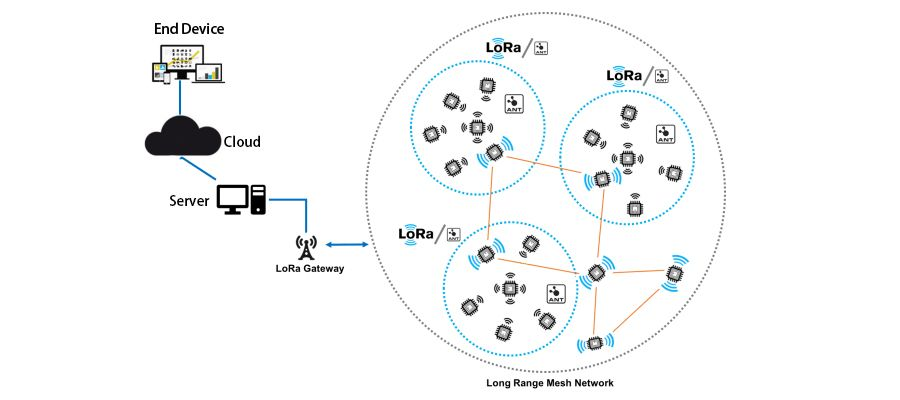
1. Key Components
LoRa End Devices: Sensors or actuators that use LoRa to communicate with LoRa gateways.
LoRa Gateways: Devices that receive LoRa data from end devices and forward it to a central server.
Mesh Nodes: Devices capable of relaying data within the mesh network. These can include sensors, actuators, or dedicated routing nodes.
Hybrid Gateways: Devices that can operate as both LoRa gateways and mesh network nodes, bridging the two networks.
2. Integration Strategies
A. Using Hybrid Gateways
Hybrid Gateway Role: Acts as a bridge between the LoRa network and the mesh network. It receives data from LoRa end devices and relays it within the mesh network or vice versa.
Data Routing: The hybrid gateway decides whether to send data directly over LoRa or route it through the mesh network based on factors like distance, network congestion, and power efficiency.
B. Dedicated Gateway and Mesh Coordinator
Separate Gateways: Use dedicated LoRa gateways for long-range communication and mesh coordinators for managing the mesh network.
Communication Interface: Establish a communication interface (e.g., via Ethernet, Wi-Fi) between the LoRa gateway and the mesh network coordinator to facilitate data exchange.
3. Technical Implementation
A. Data Flow
LoRa End Device to Gateway: LoRa end devices send data to the nearest LoRa gateway.
Gateway to Mesh Network: The LoRa gateway forwards the data to the mesh network, either directly or via a hybrid gateway.
Mesh Network to Central Server: Data is routed through the mesh network to a central server or cloud platform for processing and analysis.
B. Protocols and Middleware
MQTT: Use MQTT for lightweight messaging between devices and the central server. MQTT brokers can handle data from both LoRa and mesh networks.
CoAP: The Constrained Application Protocol (CoAP) can be used for efficient communication in resource-constrained environments.
Custom Middleware: Develop custom middleware to manage data translation and routing between the LoRa and mesh networks.
4. Network Management
A. Topology Management
Dynamic Routing: Implement dynamic routing algorithms in the mesh network to adapt to changes in topology and ensure efficient data transfer.
Network Scalability: Design the network to easily add or remove nodes, allowing for scalable deployment.
B. Power Management
Low Power Modes: Use low power modes in both LoRa and mesh devices to extend battery life.
Sleep Scheduling: Implement sleep scheduling to minimize power consumption while ensuring timely data transmission.
5. Security Considerations
Encryption: Use encryption protocols such as AES-128 for securing data transmitted over both LoRa and mesh networks.
Authentication: Implement robust authentication mechanisms to ensure only authorized devices can join and communicate within the network.